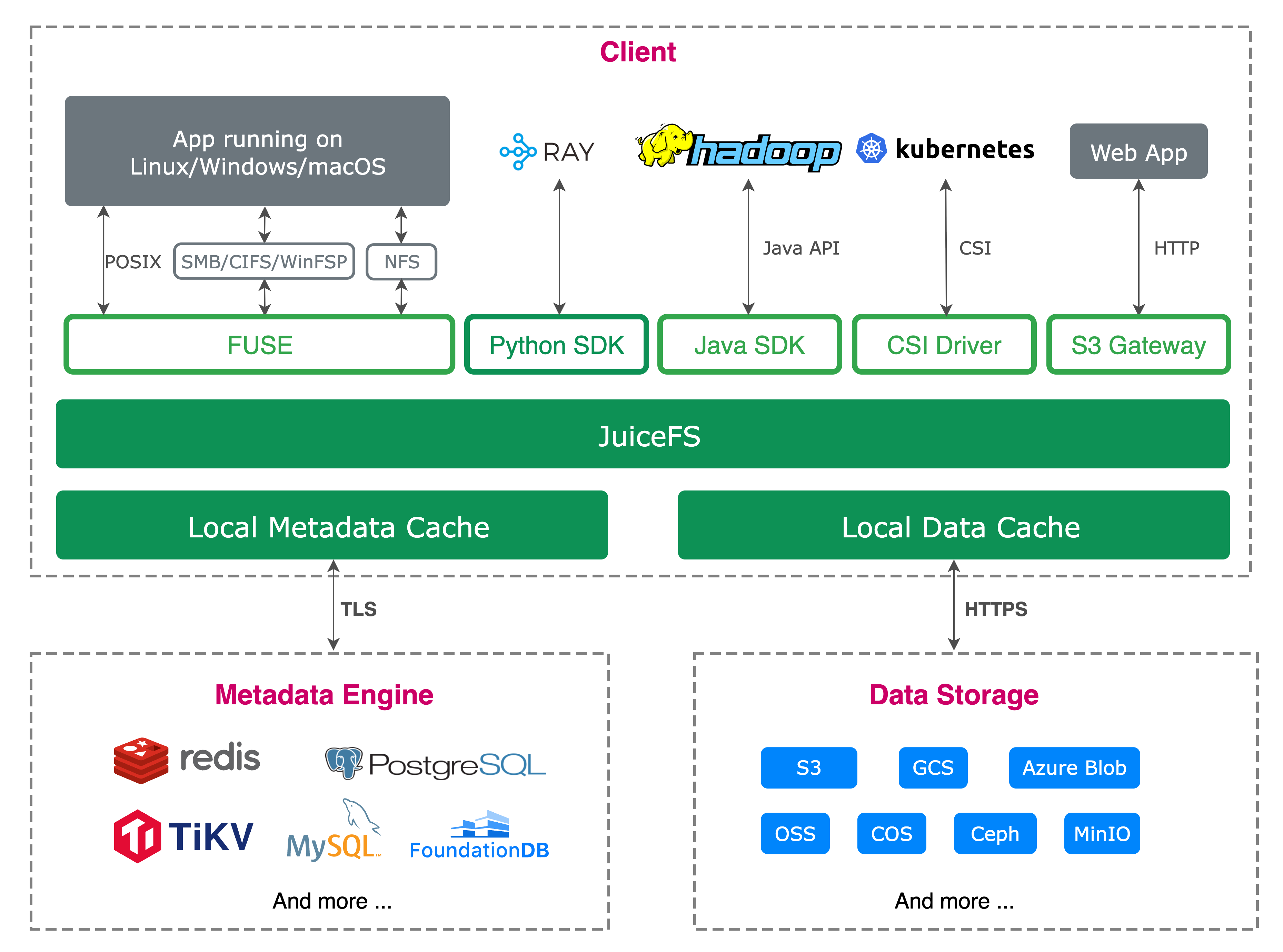
JuiceFS supports using various open-source databases as the metadata engine, including Redis, TiKV, MySQL/MariaDB, PostgreSQL, and FoundationDB, giving you the flexibility to choose the right one for your specific requirements.
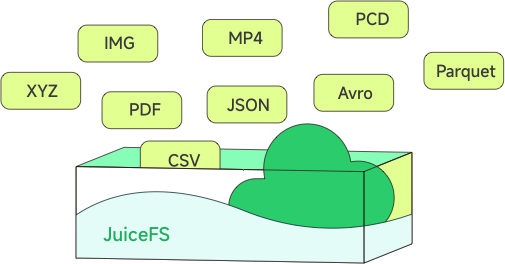
JuiceFS is fully compatible with POSIX, HDFS, S3, WebDAV, and other protocols, providing a unified storage solution for unstructured data (i.e., media files and logs), semi-structured data (i.e., JSON and Parquet), and structured data (i.e., data warehousing), unlocking diverse workloads such as AI training, complex data computing, and real-time analytics on a single platform.

JuiceFS offers a suite of built-in tools to help you monitor system operation. From assessing system availability and resource status to enhancing user experience, you can explore and analyze the performance of your services and applications running on JuiceFS easily.

If you encounter any problems when using JuiceFS or find bugs in the code or documentation, please create an issue.
If you find any bugs in the code or documentation or want to contribute a new feature, please feel free to create a pull request. Before creating a pull request, please read the contribution guidelines carefully.

Head of Infrastructure, Zhihu